

Complaint-ready communication for late rent and service disputes

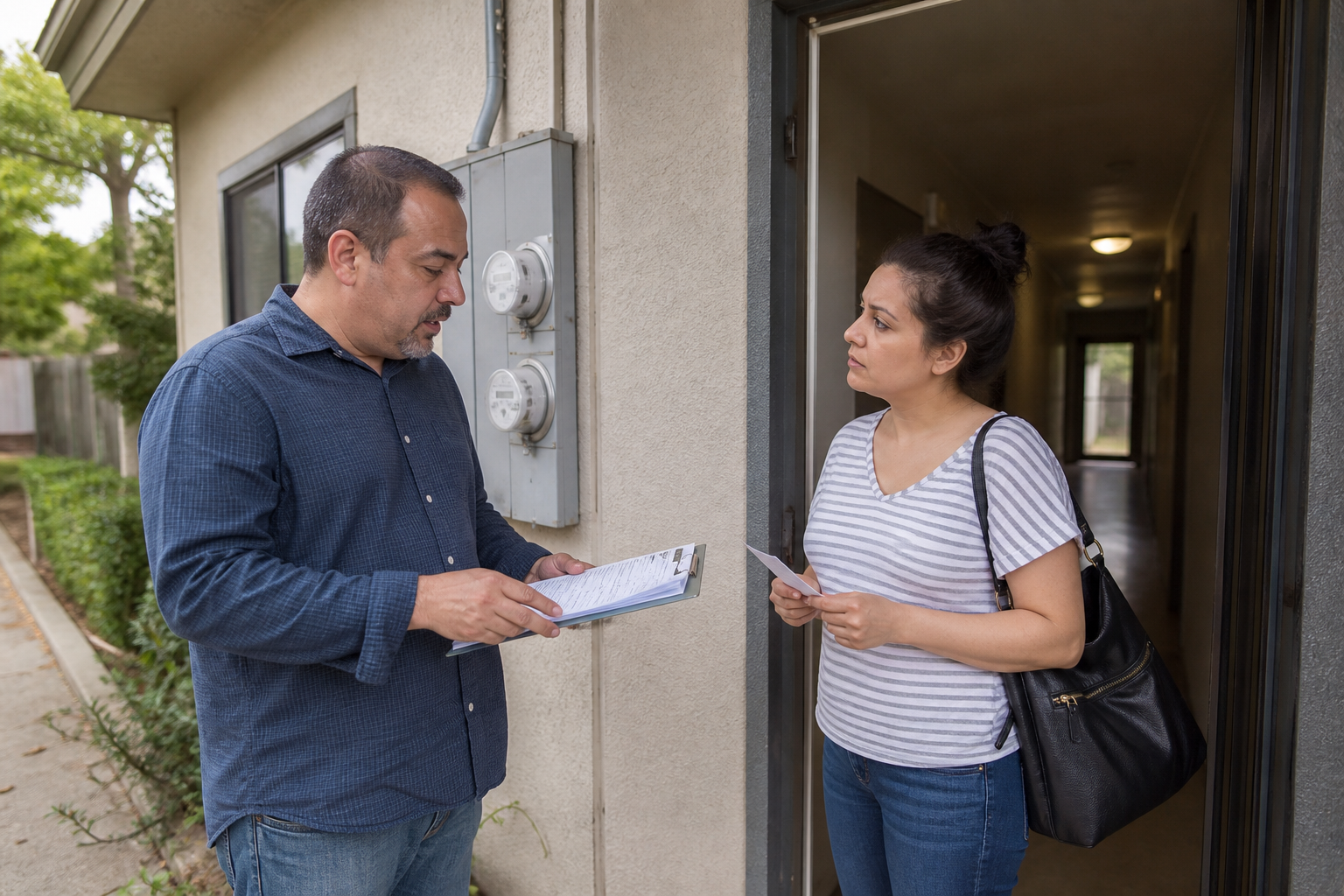
Complaint-ready communication for late rent and service disputes
When a tenant's complaint combines late rent with service problems, your timing and wording can turn conflict into a clean process. This routine helps small landlords stay responsive, organized, and consistent while protecting records and relationships.
At 6:40 p.m. on a Tuesday, the tenant message is still unread in your inbox when the same tenant writes again. This time it is not only about the late rent. The heat was out for three days, rent is still due, and the tone has shifted from polite update to formal complaint. You now have a practical problem, and a legal risk, in one thread.
Small landlords feel this because the two moments often happen at the same time. One tenant is worried about a service issue, another is worried about money. Your response in the next ten minutes sets a legal and emotional tone for everything after that. If you reply fast and calm, you can often de-escalate before the dispute becomes a document trail problem that costs a day to repair.
This post is not a courtroom guide and not legal advice. Laws and notice rules vary by state. What it does is give you a communication rhythm that is useful in daily operations and still leaves your file clean if a complaint escalates.
Why complaints pile up during rent stress
Most disputes are not about one giant conflict. They are about timing. The tenant has two concerns and wants one answer now. If you only answer the money part or only the repair part, the unresolved piece becomes a permanent complaint. That is why many late rent conversations become messy. Not because tenants are trying to be difficult, but because they are under stress and reading silence as neglect.
Keep this in mind: a complaint is often a request for predictability. The message may be angry, but the underlying ask is usually simple. The tenant wants to know what happens next, and by when.
Use a complaint-ready response routine, not a lucky sentence
Do not improvise tone in the heat of the moment. Use a repeatable routine. It keeps you consistent across units and across people who help with tenant communication while you are not there.
Step 1: Confirm the issue and separate fact from emotion
First, acknowledge only what you can verify. A useful reply is is a focused confirmation, not a full investigation. If there is no full evidence yet, say so plainly.
"I got your message about the heating and the late rent. I will review what happened with both this week and send you a plan before 6 p.m. tomorrow. I am checking the maintenance logs now."
This sentence does three things. It confirms you received the concern, names the two topics, and sets a clear next point of contact.
Step 2: Start an internal log within 15 minutes
Write it down immediately in your own notes or a ticket tool. If all you need is two lines, record tenant unit, date and time of complaint, the channels used, and your promised follow-up time. If a complaint later reaches a supervisor or legal reviewer, this first log entry matters.
In this routine, consistency beats eloquence. A short record from your side is usually stronger than a long note written the next day.
Step 3: Send one reply window and stick to it
Pick a first reply window that works in your operation. If your office has a morning and evening support block, use that schedule. But do not leave it open-ended. A strict window protects you and the tenant.
Example: "I will reply by 10:00 a.m. tomorrow and 6:00 p.m. Friday if the issue needs parts." It sounds specific, not evasive. If you miss the time, send a short update before the missed window closes. That is often enough to reduce complaint escalation.
Step 4: Separate negotiation from instruction
When rent is late and a service issue exists, do not mix deadlines in one blunt sentence. Separate the payment request from the repair update. This is not legal drama theater. It is simply clear structure.
Bad: "Pay by Friday or I start formal action."
Better: "Rent review is due Friday at 5 p.m., and I am coordinating maintenance status by tomorrow morning. If the repair is confirmed delayed, we will discuss a written amendment with a clear new due date."
That second sentence gives room to keep your options open while giving A straightforward process for both topics.
Step 5: Keep promises concrete and reversible
Never promise exact outcomes you cannot control. Promise check points and communication checkpoints instead. For example, promise that you will confirm by noon whether repair can happen today and send access timing that same evening.
Step 6: Add proof every time you communicate
For complaint-sensitive conversations, save the chain summary, maintenance ticket ID, and rent account snapshot. This is not bureaucracy, it is damage control. If a tenant says they were ignored, proof of timely replies helps you show exactly what happened and when.
Step 7: Decide escalation rules before tone drops
If no response is acknowledged after two reminder points, decide whether the case needs a manager note, a renewal review, or a formal notice path. If the unit has repeated late payment and service complaints tied to the same thread, it is usually safer to loop in a second point of contact before the conversation becomes accusatory.
A practical script you can use live
Use the following structure in your own words:
1. Start with what you heard: "I received your message about [issue] and I understand why this is frustrating."
2. Confirm what you checked: "Here is what is currently in my system."
3. State your next concrete step: "I will contact [partner] within [time] and share the access window."
4. Clarify payment position: "Rent remains due at [amount/date], and I will keep you updated on any changes to repair timing."
5. End with an exact follow-up time: "You will hear from me by [day/time]."
Try this for two days on your own units. You will see that most tenants stop escalating when they have fixed checkpoints. Not because they are persuaded by perfect legal language, but because uncertainty reduces when timelines are clear.
When the complaint asks for promises you cannot guarantee
At some point, the tenant may ask for a refund, a temporary rent reduction, or credit. Do not promise a concession you have not approved in writing. State your process instead. If the legal framework in your state gives tenants specific remedy paths, follow that structure and keep your language narrow. You can keep the tone supportive without committing money or rights you cannot justify.
Also avoid emotional rebuttal language. A sentence like "you got this wrong" adds heat. A neutral sentence like "I reviewed your timeline and I will share the maintenance confirmation before I move to next steps" keeps communication respectful and records cleaner.
Keep one weekly complaint review
Every week, spend twenty minutes on cases with repeated complaints. Not all complaints are bad. Some are data points about where your communication policy is missing timing. Sort by three buckets: recurring payment delay, recurring access or maintenance complaints, and recurring message confusion.
If two of these show up in one tenant, move that unit into a dedicated follow-up schedule. This is where many landlords improve quickly. The next complaint often arrives with a date and a specific request, more often a broad grievance. "The repair was promised for Tuesday and has not happened yet" is easier to solve than "my unit is falling apart."
What to document after each complaint cycle
- Time and channel of first complaint
- First acknowledgment message and send time
- Maintenance or payment action taken and contractor confirmation
- Next follow-up time promised, sent, and completed
- Final outcome and escalation decision
This list is short for a reason. You do not need perfect legal prose. You need clean, repeatable records. Over time, that consistency is what protects both your legal position and your operations.
Where PropertySea fits
Once you run this routine, your team can reuse the same sequence across units and avoid copy-paste chaos. The real benefit is not only fewer complaints. It is fewer surprise calls, fewer weekend firefights, and fewer tense updates after midnight.
For a practical way to keep these follow-up windows and message notes in one place, you can download PropertySea and set up a complaint tracker that gives each thread a deadline and an ownership owner.
When your process says what happens next, most tenants do not need to keep arguing for answers. That alone is usually the best legal first step a small landlord can take.
Direct URL: https://propertysea.app/download

The Millionairess Mentality: A Professional Woman's Guide to Building Wealth Through Real Estate
These are our handpicked books to help you level up in Real Estate.
View on Amazon
Student Rentals And High-Turnover Tenants: How To Stay Profitable And Sane
Renting to students and other short-cycle tenants can be profitable, but only if you plan for turnover, wear-and-tear, and systems that keep chaos under control.
Read More
The Complete Guide to Tenant Retention (That Actually Works)
Losing a good tenant is expensive. Here's how to keep your best renters happy, loyal, and renewing year after year.
Read More